
Family owned & operated
Our name is in our work.
Containment, HEPA filtration, and negative air during mold removal
Call (512) 612-5866 for mold removal & remediation pricing and the next available estimate.
What the barriers and filtration equipment do—and why cleanup should not spread the problem into neighboring rooms.
Newman Mold Company · Published
Why disturbance changes the job
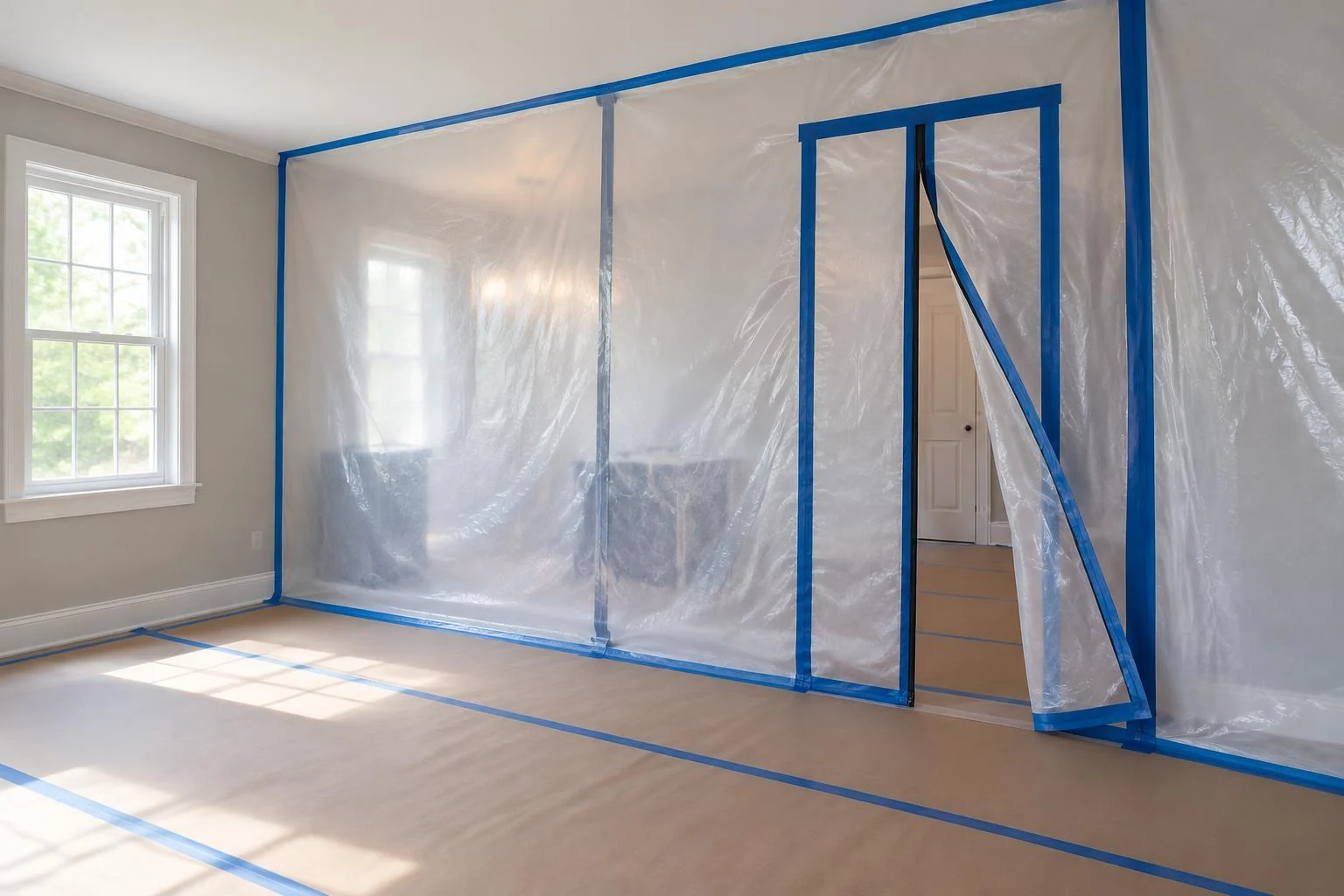
Removing affected drywall or cleaning a contaminated surface can release dust and spores. A controlled work area helps limit movement into adjoining rooms. The level of containment depends on the work, materials, and required protocol rather than a one-size-fits-all setup.
Newman uses containment, negative air, and HEPA-equipped filtration as the scope requires. Not every visit is a full remediation project, and not every project needs every piece of equipment.
Containment and negative air have different roles
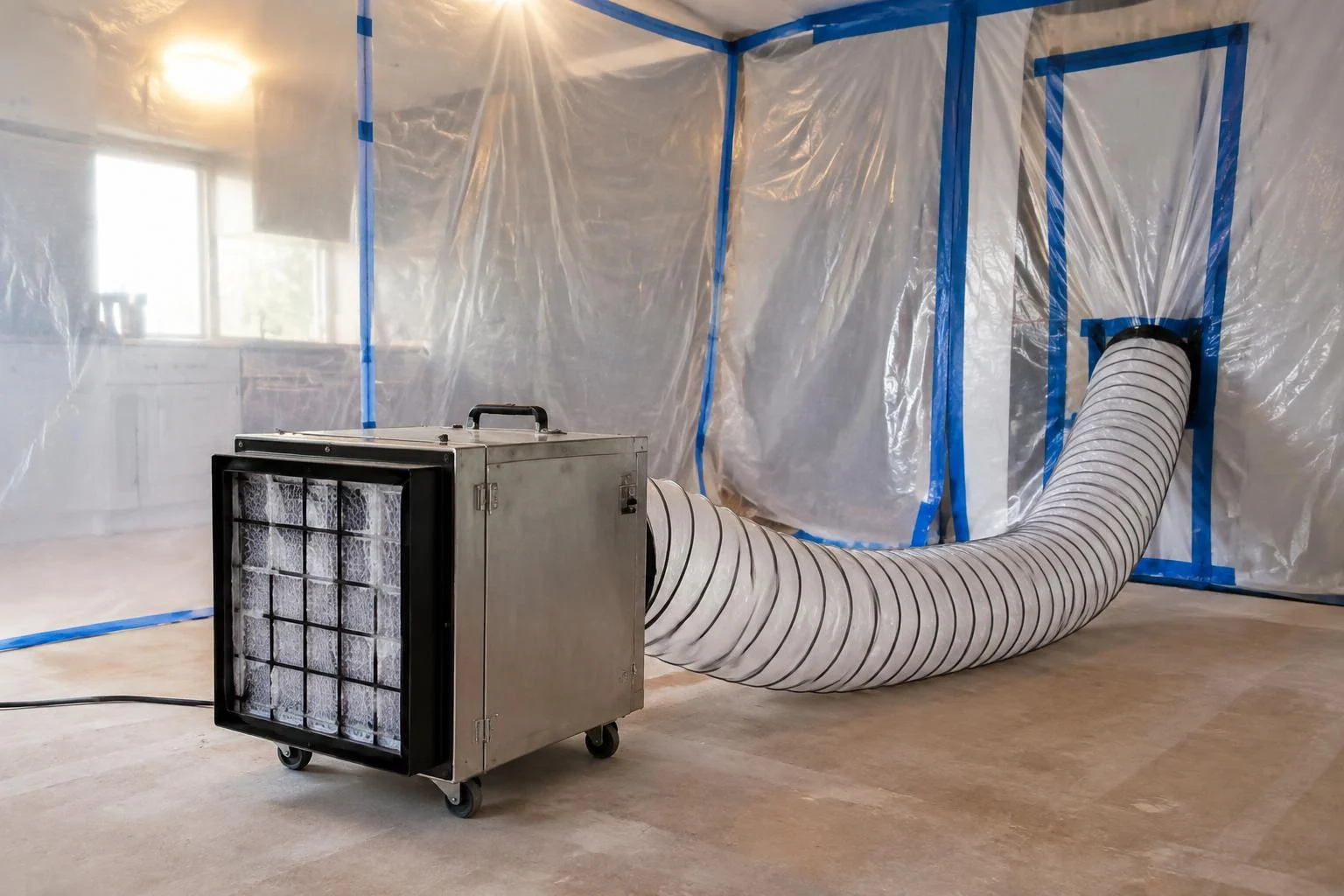
Containment physically separates the work area. Negative air is arranged to help direct airflow toward that area rather than out into surrounding space. The setup must suit the property and work plan; leaving barriers open or changing equipment settings can undermine the intended control.
Filtration is support, not the whole solution
HEPA air scrubbers filter airborne particles. HEPA vacuuming helps remove settled debris as part of cleanup. Neither replaces affected-material removal, appropriate surface cleaning, or moisture correction. An air scrubber alone cannot make hidden wet drywall a completed remediation job.
Ask how the surrounding space is protected
Before work, ask which rooms will be isolated, how debris will be handled, what access is restricted, and how clearance is determined. We do not use air movers on mold jobs because uncontrolled airflow can disperse spores. For regulated projects, an independent licensed assessment consultant verifies completion against the protocol.
Sources & further reading
General property guidance, not medical or legal advice. Methods, requirements, and recommendations depend on site conditions and the applicable scope. For health concerns, consult a qualified healthcare professional.