
Family owned & operated
Our name is in our work.
Serving Austin, San Marcos, New Braunfels & the Hill Country
Residential asbestos abatement
Call for asbestos abatement pricing · (512) 612-5866Licensed for residential asbestos abatement in Texas. Drywall, joint compound, mastic, adhesive or other asbestos-containing material (ACM), ceiling texture, insulation, floor tile — removed safely, contained, and disposed of properly, with the same care we bring to mold remediation.
- Same-day assessments when available
- Licensed residential asbestos
- Third-party testing coordinated
- Contained, wet-method removal
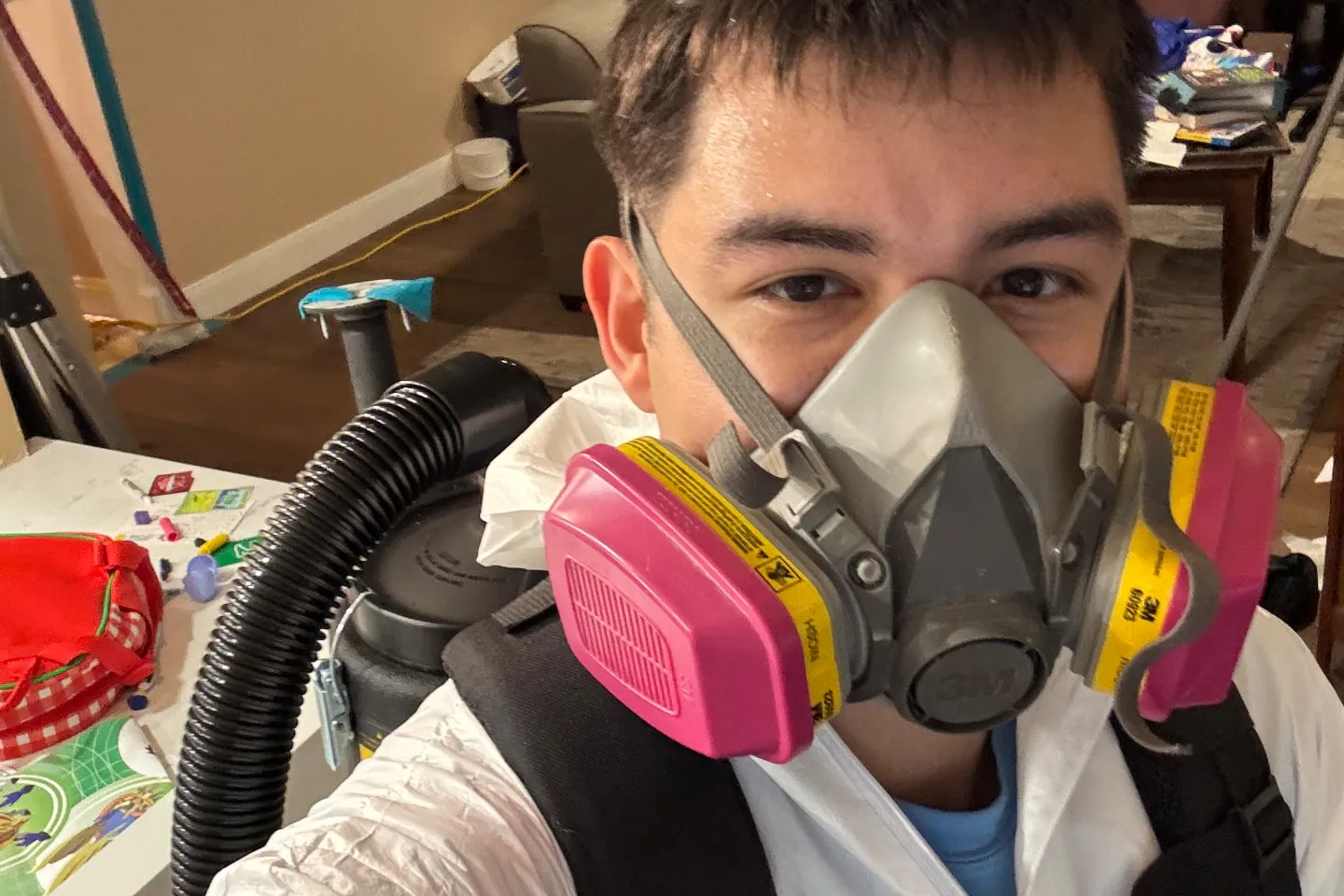
Family owned & operated · Licensed crews onsite
- IICRCCertified
- Mold RemediationTDLR Licensed
- EPACertified
- FullyInsured
Same-day availability
Same-day asbestos assessments & abatement
Same-day onsite assessments can often be accommodated — call early to check your location.
Same-day abatement may be possible once testing confirms the material and the job size allows.
Check today's availability · (512) 612-5866Asbestos abatement, start to finish
- 01
Call us
Free phone consultation and pricing guidance.
- 02
Third-party testing
An independent licensed inspector samples suspect materials — we can connect you.
- 03
Abatement
Containment, negative air, wet removal, sealed disposal.
- 04
Final cleaning
HEPA vacuuming, wet wiping, and visual inspection before teardown.
Texas requires asbestos testing to be performed by a licensed third party. We don't test our own jobs — ask us to connect you with an inspector · (512) 612-5866
How we remove asbestos safely
Containment
Poly sheeting with sealed seams isolates the work area; HVAC in the zone is shut down and vents sealed.
Negative air
HEPA air filtration machines keep the containment under negative pressure so fibers stay inside.
Wet methods
Materials are kept wet during removal to limit airborne fibers — never dry scraping or sanding.
Protective equipment
Crews wear respirators and disposable coveralls, with decontamination on exit.
Sealed disposal
Waste is double-bagged, labeled, and transported to an approved disposal facility.
HEPA cleanup
HEPA vacuuming and wet wiping of all surfaces before the containment comes down.
Why asbestos is hazardous
Health effects
Breathing in asbestos fibers is linked to asbestosis (lung scarring), lung cancer, and mesothelioma. Symptoms often appear 10–40+ years after exposure, and there is no known safe level of exposure.
When it becomes dangerous
Intact, undisturbed material is usually low risk. The hazard comes when material is damaged or disturbed — sanding, scraping, cutting, drilling, or demolition release microscopic fibers that stay in the air and settle on surfaces.
Friable vs. non-friable
Friable material (crumbles by hand pressure, like old pipe insulation or popcorn ceiling) releases fibers easily and is the most hazardous. Non-friable material (floor tile, cement siding) can become friable when broken or ground.
This is general information, not medical advice. If you have health concerns about exposure, talk to a healthcare professional.
Texas requirements
- Asbestos in Texas is regulated by the Department of State Health Services (DSHS).
- Suspect materials must be tested by an independent, licensed third-party inspector — we don't test our own jobs.
- Abatement is performed by licensed contractors and workers; Newman is licensed for residential asbestos abatement.
- Asbestos waste must be wet, sealed in labeled bags, and taken to an approved disposal facility.
- Larger projects and some property types carry notification and other requirements — we review what applies before scheduling.
- Do not sand, scrape, or demolish suspect material yourself before testing.
How asbestos abatement compares to mold remediation
Asbestos and mold are different hazards, but both are controlled the same core ways: keep the contamination in one place, keep it out of the air, and remove it without spreading it.
Containment
Same as mold: Plastic sheeting with sealed seams isolates the work area, and HEPA negative air keeps air flowing in, not out.
For asbestos: Containments are fully sealed, HVAC in the area is shut off and vents covered, and crews decontaminate before exiting.
Wet method removal
Same as mold: Materials are removed in a controlled way to limit what becomes airborne.
For asbestos: Material is thoroughly wetted before and during removal — never dry scraped or sanded — because dry fibers become airborne instantly.
HEPA vacuuming
Same as mold: HEPA vacuums capture fine particles that ordinary vacuums blow back into the room.
For asbestos: HEPA vacuuming plus wet wiping is mandatory for final cleanup; a regular shop vac or broom is never used.
PPE
Same as mold: Respirators, gloves, and disposable coveralls protect the crew and stop cross-contamination.
For asbestos: Respirators are rated for asbestos fibers, and suits are bagged as asbestos waste at the end of each shift.
Abatement practices
Controlled, contained work
The same containment, filtration and protective practices we use on every serious job.
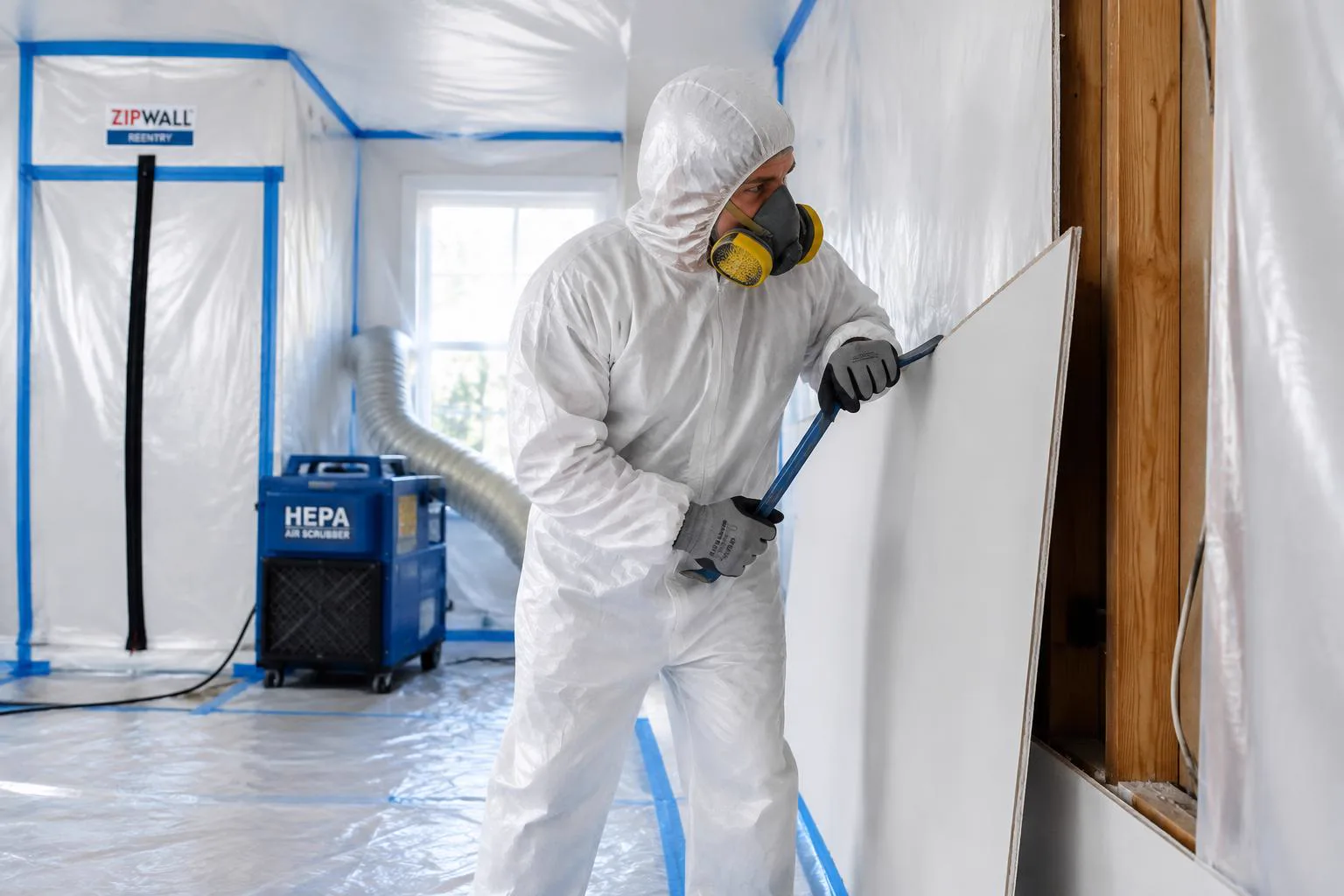
Drywall removed inside containment
Drywall comes down inside sealed plastic with the crew in respirators and coveralls.
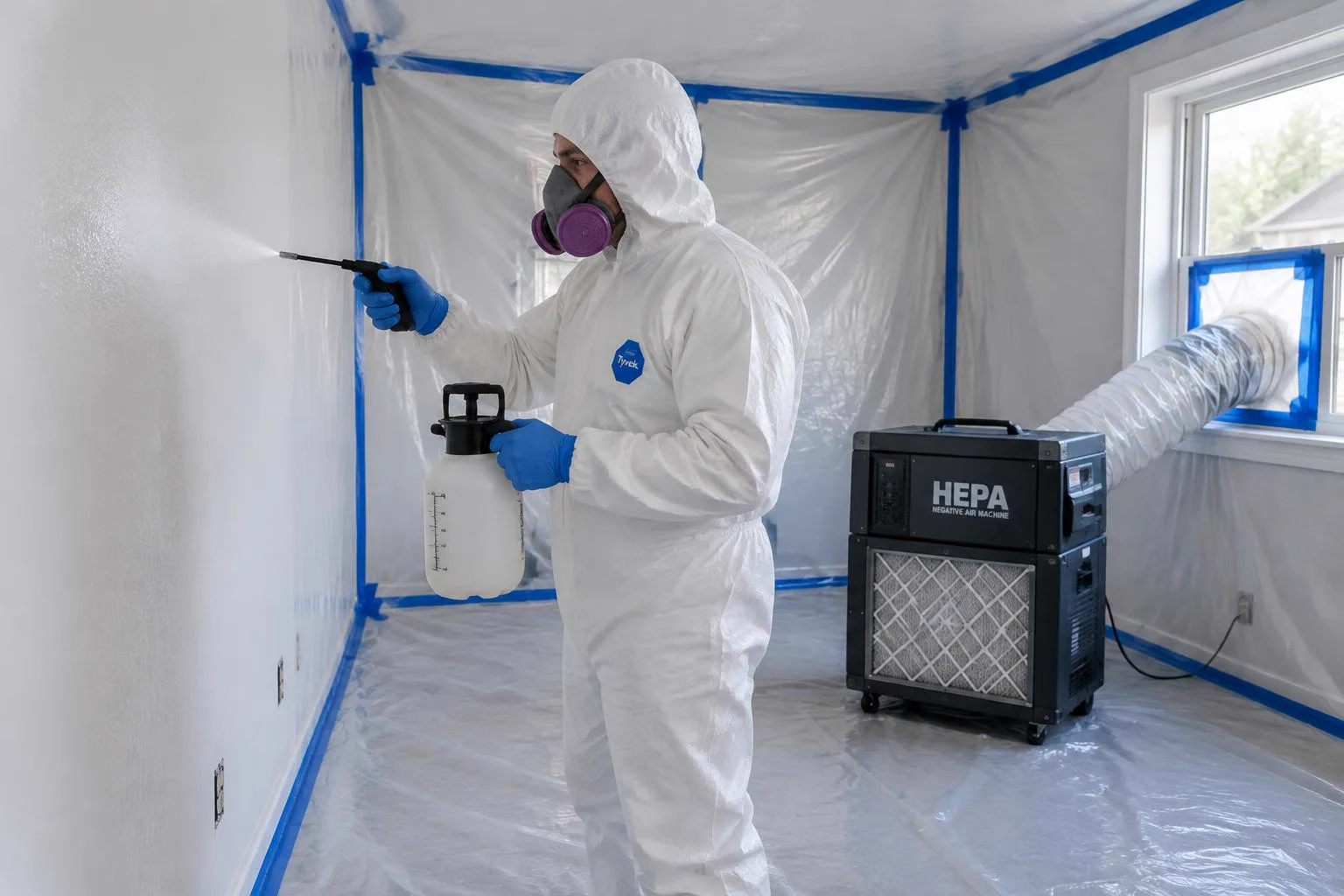
Wetting before removal
Material is wetted before removal so fibers stay out of the air.
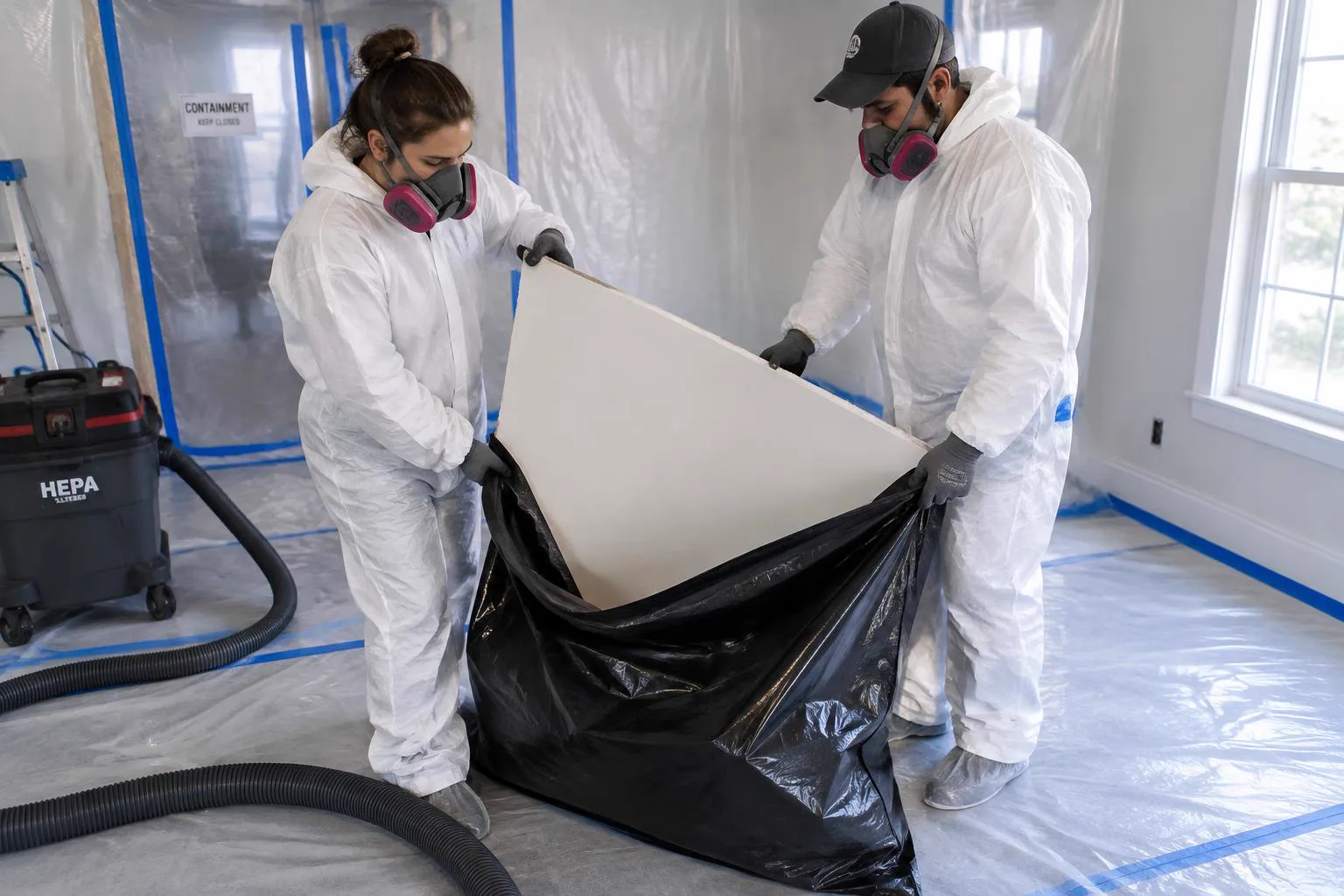
Sealed waste removal
Removed material is bagged inside containment for approved disposal.
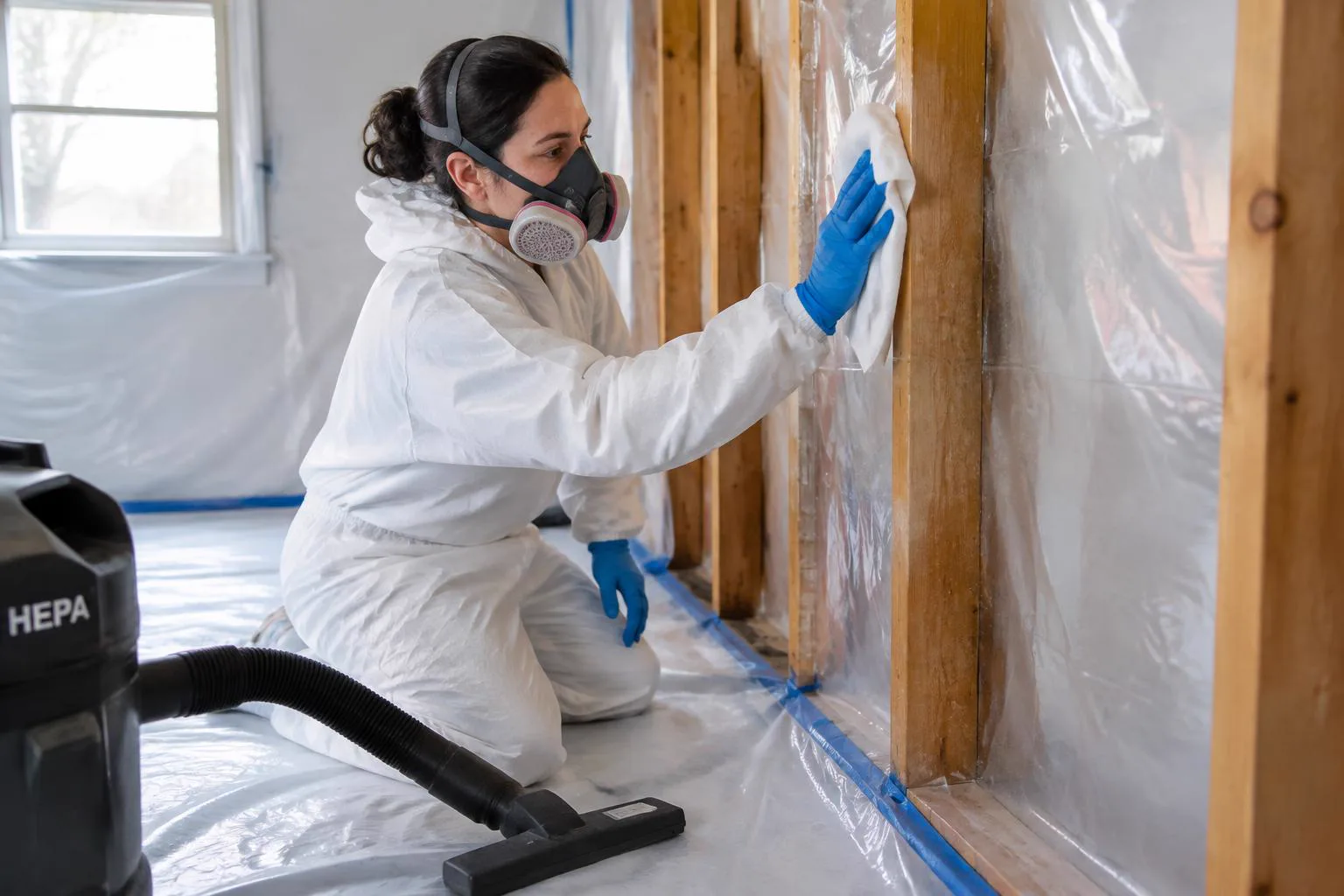
HEPA vacuum and wet wipe
Surfaces are HEPA vacuumed and wet wiped before the containment comes down.
Areas we serve
- Austin
- Round Rock
- Georgetown
- Cedar Park
- Leander
- Pflugerville
- Lakeway
- Dripping Springs
- San Marcos
- New Braunfels
- Kyle
- Buda
- Wimberley
- Canyon Lake
- Seguin
- Texas Hill Country
Also need mold work? See Austin or Hill Country mold remediation.
Mold service questions · asbestos abatement
Do you test for asbestos?
No. Asbestos testing is performed separately by an independent, Texas-licensed asbestos inspector. We can connect you with one, then abate confirmed materials to the inspection results.
What materials commonly contain asbestos?
In older homes: drywall and joint compound, mastic, adhesive or other ACM, ceiling texture (popcorn or sprayed acoustic), pipe, duct and boiler insulation, vinyl floor tile, and other building materials. Only lab testing can confirm it.
Can you start the same day?
Same-day assessments and abatement can often be accommodated, depending on testing results, job size, and our schedule. Call early to check availability; it is not guaranteed.
Is my home's asbestos work regulated?
Yes. Asbestos in Texas is regulated by the Department of State Health Services. We are licensed for residential asbestos abatement and review what applies to your job before scheduling.
Can I stay home during abatement?
Often, when the work area is sealed off from living spaces. We discuss occupancy and room access before work begins.
What should I do if I disturbed a suspect material?
Stop work, keep people and pets out of the area, don't sweep or vacuum the debris, and call us.
Reviews & directories
Our name is in our work.
Newman Mold Company is family owned and operated, and we stand behind every job. When your project is finished, we send you a direct link to share your experience.
Rated 5.0 by customers on Yelp and Thumbtack. Five stars is the standard we hold every job to, large or small. Here is what that looks like on your property:
- 1We find the moisture source before we start.
- 2We contain the affected area and filter the air while we work.
- 3We remove what cannot be saved and clean what can.
- 4We document the work and arrange independent clearance when required.
- 5We answer the phone after the job — our name is in our work.
Google reviews
Ask us about our work — call and we will connect you with a recent customer you can speak to directly.
Call (512) 612-5866 to ask for a customer reference before you book.
Find us on
Find Newman Mold Company across the web.
Speak with our team
Suspect asbestos in your home?
Don't disturb it. Call for pricing guidance, help arranging third-party testing, and the next available assessment.
Phone consultation · (512) 612-5866